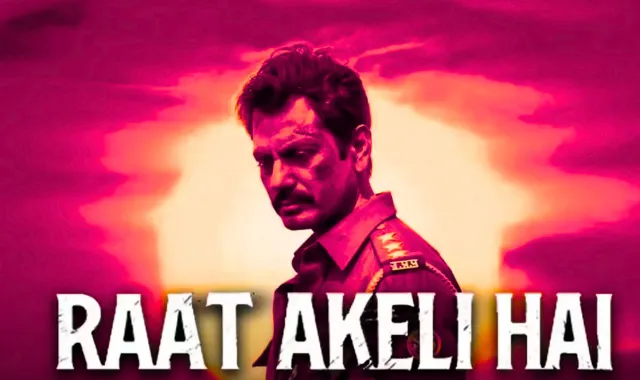
The Indian film industry has long had an affinity for the “whodunit” genre, but few films manage to capture the dark, atmospheric, and deeply patriarchal realities of small-town India like Raat Akeli Hai. Released in 2025, this film marks the directorial debut of Honey Trehan, earning critical acclaim and quickly establishing itself as a modern cult classic.
Unlike standard police procedurals, Raat Akeli Hai is a slow-burn noir thriller. It explores not only “who” committed the crime, but more importantly, “why” and “how” a family’s moral decay allows evil to flourish. The film stars Nawazuddin Siddiqui as Inspector Jatil Yadav and Radhika Apte as Radha, with a supporting cast that brings the intricate world of small-town North India to life.
Cinematic
| Category | Details |
| Director | Honey Trehan |
| Lead Actor | Nawazuddin Siddiqui (Inspector Jatil Yadav) |
| Lead Actress | Radhika Apte (Radha) |
| Genre | Crime, Drama, Mystery, Noir |
| Streaming Platform | Netflix |
| Cinematographer | Pankaj Kumar |
| Key Themes | Patriarchy, Casteism, Corruption, Redemption |
| Runtime | 149 minutes |
Plot Summary: A Wedding That Turned Into a Funeral

Set in rural Uttar Pradesh, the film opens with a prologue of a double murder from the past, creating a lingering shadow over present events. The main story begins with the brutal murder of Raghuveer Singh, a wealthy and powerful landlord, on his wedding night. The irony is stark: a man celebrating a new beginning meets a sudden and violent end in his own home.
The suspects are many: his children from a previous marriage, brother, nephew, and the young bride, Radha, who is from a “questionable” background according to the family. Radha, however, is a survivor of circumstances—a woman essentially sold into this marriage.
Inspector Jatil Yadav is summoned to investigate. His character is complex: flawed, insecure, and deeply human. From the outset, he faces resistance from the Singh family and political pressure from local authorities. The local politician, played by Aditya Srivastava, wants a quick resolution, but Jatil is relentless, driven by both professional duty and his growing empathy for Radha.
Layered Family Secrets
As Jatil investigates, the true nature of the Singh household emerges:
- Raghuveer was not benevolent; he manipulated women in the family and used his power to silence dissent.
- A web of crimes, including land grabbing, exploitation, and corruption, is revealed.
- Each family member has a motive, creating a tense, claustrophobic atmosphere.
The title, translating to “The Night is Lonely”, becomes metaphorical: it reflects the darkness and secrecy that cloaks the household, hiding both personal and systemic crimes.
Character Analysis
Inspector Jatil Yadav
Nawazuddin Siddiqui portrays a multi-dimensional investigator:
- Insecure about his skin tone, he uses fairness creams to conform to societal beauty standards.
- Constantly nagged by his mother about marriage, he struggles with personal expectations vs. societal norms.
- His journey parallels the investigation: solving the murder while confronting his own biases and insecurities.
Jatil is not a traditional superhero cop; he is relatable, human, and vulnerable, which adds realism to the narrative.
Radha: The Reluctant Femme Fatale
Radhika Apte delivers a nuanced performance:
- Subverts traditional noir tropes of the femme fatale.
- A survivor of abuse, Radha is guarded, cynical, and aware that her silence and beauty are her only tools in a patriarchal system.
- Her bond with Jatil evolves from prejudice to empathy, eventually forming a protective connection built on mutual understanding.
Social Commentary: Patriarchy, Power, and Corruption
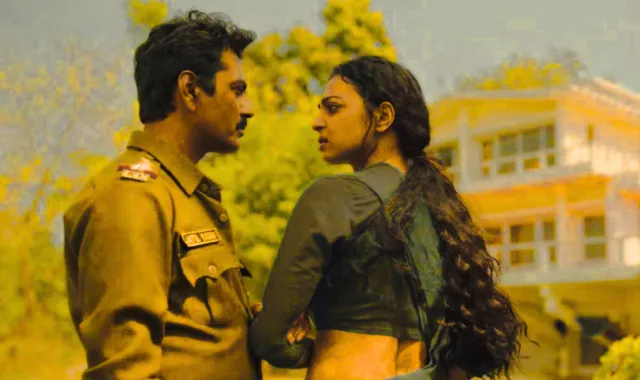
Raat Akeli Hai is more than a murder mystery; it is a scathing critique of North Indian patriarchy:
- The Singh family exemplifies absolute male dominance at the expense of women and younger men.
- Women’s silence is a survival tactic, reflecting systemic oppression.
- Jatil’s initial chauvinism mirrors the society he inhabits; his personal growth represents unlearning inherited biases.
The film suggests that the real mystery lies in how such broken systems persist, maintaining the status quo while perpetuating moral decay.
Cinematic Techniques
Cinematography
- Pankaj Kumar’s cinematography uses shadows, low-light, and tight framing to create a claustrophobic, tense atmosphere.
- Interiors of the haveli contrast sharply with dusty exteriors, highlighting the difference between public façade vs. private reality.
- Camera lingers on expressions, revealing guilt, fear, or complicity.
Sound Design
- Ambient sounds like ticking clocks and rustling sarees heighten suspense.
- Silence is used strategically; there are no jump-scare scores, creating a slow-burn tension.
Editing
- Edited by A. Sreekar Prasad, pacing is deliberate but never bloated.
- Each scene moves either plot or character development forward, maintaining engagement for 149 minutes.
The Murder Investigation
Key Steps in Jatil’s Investigation
- Family Interrogations: Revealing secrets, alibis, and motives.
- Evidence Analysis: From blood patterns to hidden objects in the haveli.
- Tracing Past Crimes: Linking the murder to a double homicide from the past.
- Political Interference: Balancing law enforcement vs. local power dynamics.
The Ending Explained
- The killer is Pramod Kushwaha, Raghuveer’s nephew.
- Motive: covering a past crime from the prologue and preventing exposure of family secrets.
- Radha is framed initially, but Jatil uncovers the truth.
- Moral closure: Radha walks away with dignity; Jatil achieves self-acceptance.
The Role of Jatil’s Mother
- Played by Ila Arun, she is a subtle moral compass.
- Provides comic relief, yet offers ethical guidance when Jatil struggles with legal vs. moral obligations.
- Represents generational perspectives on power and justice.
Review: Why It Stands Out
- Avoids flashy tropes, relying on dialogue, atmosphere, and performance.
- Nawazuddin Siddiqui’s portrayal is gritty, vulnerable, and believable.
- Supporting cast makes the Singh family feel authentic.
- Deliberate pacing encourages audience reflection and engagement.
Technical Highlights
| Aspect | Description |
| Cinematography | Low-light, shadows, tight framing |
| Sound | Ambient noise, silence-driven suspense |
| Editing | Tight narrative, purposeful scenes |
| Runtime | 149 minutes |
| Visual Symbolism | Haveli interiors vs. dusty exteriors |
FAQs
Q1: Is the film based on a real-life incident?
Ans: : No, it is fiction inspired by classic noir and reflects real social dynamics in rural India.
Q2: Who killed Raghuveer Singh?
Ans: His nephew, Pramod Kushwaha, as part of a conspiracy to hide past crimes.
Q3: What does the fairness cream signify?
Ans: Jatil’s insecurity and desire for societal acceptance; stopping its use signifies self-acceptance.
Q4: Why is it titled Raat Akeli Hai?
Ans: The Night is Lonely” is a metaphor for loneliness and secrets.
Q5: Do Jatil and Radha end up together?
Ans: Open-ended; a bond of respect and protective empathy develops.
Q6: What was in the trunk/tank?
Ans: Skeletal remains linking Raghuveer and Pramod to a previous double murder.
Q7: Where can I watch it in 2026?
Ans: Available globally on Netflix, with subtitles and dubbed versions.
Conclusion
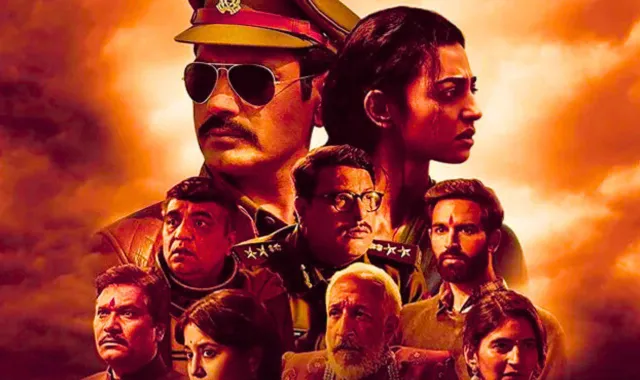
Raat Akeli Hai is a masterclass in Indian noir, blending murder mystery with social commentary. It highlights the dark corners of human nature and the structural rot of patriarchy.In a 2026 world dominated by bite-sized entertainment, this film stands as a tribute to patient storytelling. With strong performances, atmospheric cinematography, and intricate plotting, it is a must-watch for anyone interested in psychological thrillers and thought-provoking cinema.Whether you are a fan of Nawazuddin Siddiqui, Radhika Apte, or Indian noir, Raat Akeli Hai is a cinematic experience that stays with you long after the credits roll.